
Background
In a side-impact collision, the vehicle's airbag control module recorded a lateral delta-V of approximately 19 mph. Based on population-level crash data, a side impact in this range, without significant structural intrusion, would generally carry a low risk of fatal injury.
Given these metrics, the crash was expected to be survivable. The injury outcome, however, was fatal.
Understanding why required looking beyond the numbers.
The Challenge
Delta-V is a widely used metric in crash reconstruction. It captures the magnitude of a collision and serves as a general indicator of crash severity. However, it is a population-level measure that describes what typically occurs in crashes of a given magnitude, not necessarily what happened in a specific event.
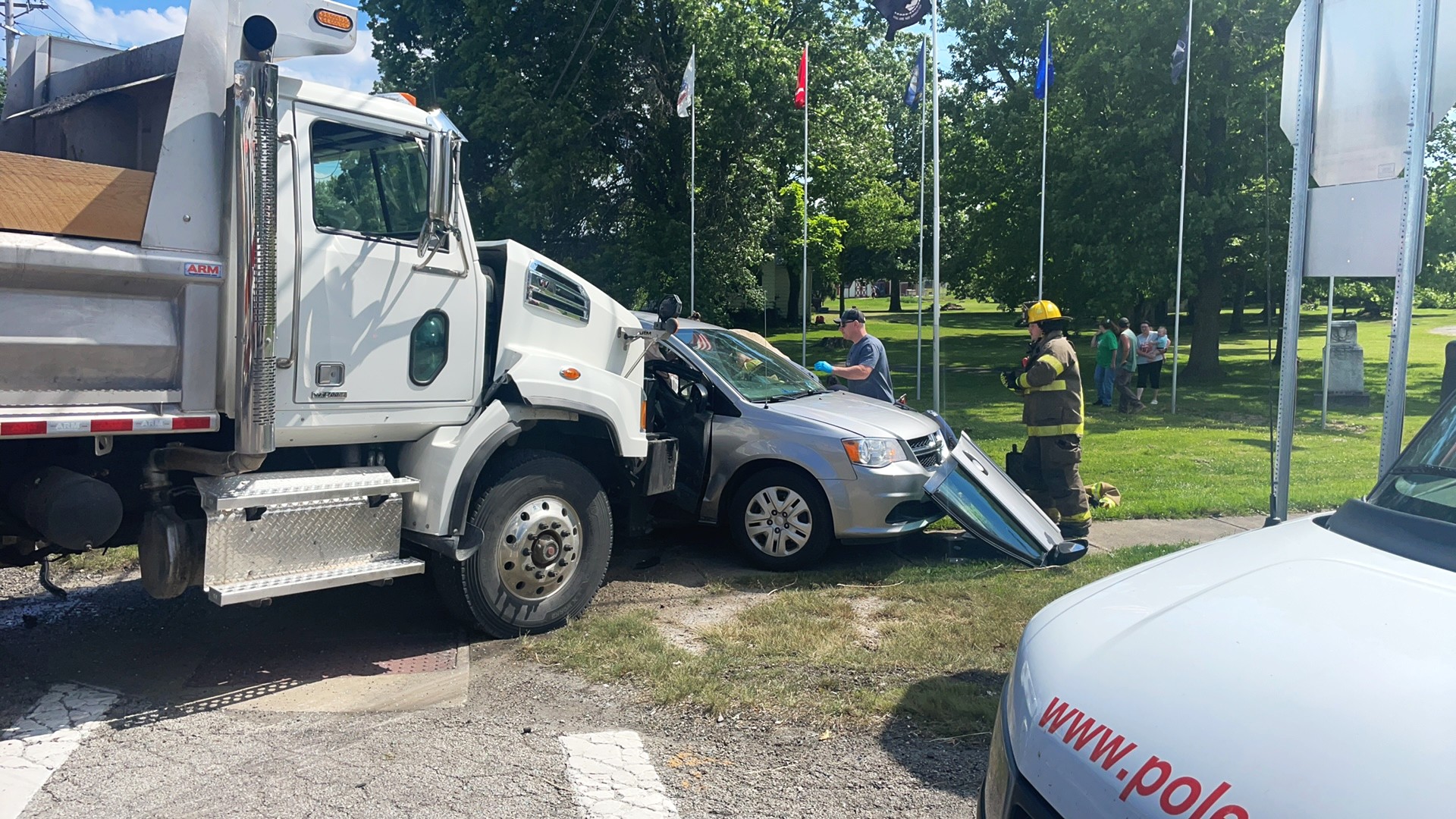
This collision involved a rigid component attached to the striking vehicle that entered the occupant compartment, concentrating impact forces over a small area of the passenger's body. These circumstances required a biomechanical evaluation to determine how the injuries occurred.
The Analysis
TRC Forensic Engineering conducted a biomechanical analysis to examine the mechanics of the collision and their relationship to the documented injuries.
Occupant Kinematics
How the occupant moved during the side impact and their position relative to the intruding structure at the moment of contact.
Intrusion Geometry
The location, direction, and depth of the vehicle intrusion into the occupant compartment, and how this affected available survival space.
Occupant Anthropometry
The passenger's physical characteristics and how they influenced exposure to the intruding structure.
Force Concentration
How impact loading was distributed across the contact area. The same force, concentrated on a smaller surface, produces markedly different tissue loading than one spread across a larger area.
Anatomical Structures in the Intrusion Path
Which organs, vessels, and skeletal elements lay within the path of the intruding component.
Injury Consistency
Whether the documented injuries were consistent with a typical side impact or reflected direct structural penetration and concentrated force.
The Finding
The investigation identified three factors that explained the fatal outcome:
- Intrusion geometry: The shape and trajectory of the intruding component.
- Loss of occupant survival space: Reduced available survival space within the occupant compartment.
- Localized force application: Impact forces concentrated over a limited contact area.
Together, these factors fundamentally changed the injury mechanism, providing a biomechanical explanation for why the injury outcome was not reflected by the recorded crash severity metrics.
The Takeaway
Crash severity is not just a number. It is also about:
- How forces are applied to the human body
- Where on the body those forces act
- Over what area the loading is distributed
- What structures lie in the path of those forces
This case demonstrates why biomechanics is valuable in high-energy and catastrophic collision investigations. By examining occupant motion, intrusion characteristics, contact mechanics, tissue loading, and injury patterns, biomechanical analysis provides a fuller picture of how injuries occur and whether they align with the crash circumstances.
Relevant Case Types
The principles demonstrated in this case apply across a range of investigations:
- Fatal crash cases where recorded data suggests survivability but the outcome wasn't.
- Catastrophic injury cases where injury severity appears disproportionate to crash metrics.
- Vehicle intrusion cases where occupant survival space was compromised.
- Product liability claims where vehicle structure or component design may have contributed to injury outcome.
- Insurance investigations where crash severity metrics are used to challenge injury claims.
About This Service
TRC Forensic Engineering provides biomechanical analysis and injury causation evaluations for motor vehicle collisions and other incidents. Our experts combine engineering and biomechanical principles to explain complex injury outcomes and support informed decisions in litigation and claims investigations.